|
Ziping Zhao
My research interests lie at the intersection of machine learning, signal processing, optimization, applied probability, and statistics, with applications to emerging problems in data science and AI. Our group develops mathematical and computational methods for learning, inference, sensing, and decision-making in complex and networked systems. The overarching objective of our research is to bring theoretically grounded and computationally efficient methods together with emerging data science problems, so that methodological advances and practical applications can inform and reinforce each other. In pursuit of these objectives, the research in our group is organized into the following topics.
Optimization and Statistical Learning for Complex and High-Dimensional Data
|
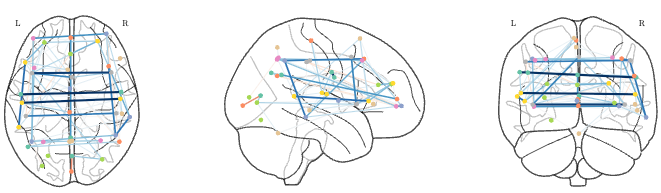
Modern datasets are increasingly high-dimensional, heterogeneous, imperfect, and distributed across multiple locations. These characteristics pose fundamental challenges to statistical reliability and computational efficiency, particularly when conventional modeling assumptions are no longer appropriate. Optimization and statistical learning provide a natural framework for incorporating structural information, latent variables, distributional uncertainty, and imperfect observations into principled models of complex data. The interaction between modeling and computation is especially important in high dimensions: structural assumptions may improve statistical efficiency, but they also reshape the geometry and complexity of the underlying optimization problems. Robustness becomes equally important when data depart from idealized assumptions through heavy tails, contamination, missingness, quantization, or other forms of uncertainty. A central challenge is therefore to understand how statistical efficiency, robustness, structural assumptions, and computational tractability can be reconciled within a common methodological framework.
|
|
Graph Neural Networks and Signal Processing
|
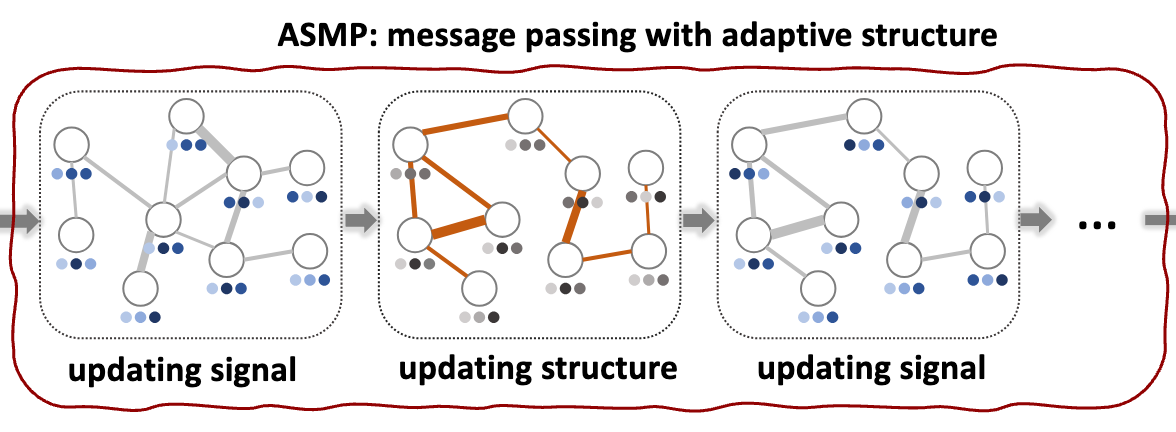
Many forms of data are naturally supported on graphs, where relationships among entities carry information beyond that contained in individual observations. Graph neural networks and graph signal processing offer complementary views of such data: one emphasizes flexible representation learning, while the other provides structural, spectral, and model-based perspectives on information over networks. Bringing these viewpoints together creates opportunities to design learning architectures whose behavior can be understood through the underlying graph structure rather than treated purely as a black box. At the same time, the graph itself may be uncertain, noisy, time-varying, or only partially known, so representation learning and structure learning can become closely intertwined. This leads to broader questions about how information should propagate over a graph, which structural features should be preserved, and how sensitive learned representations are to perturbations of the topology. The broader aim is to make graph-based learning expressive and adaptive without sacrificing stability, interpretability, or robustness to uncertainty in the underlying structure.
|
Distributed Machine Learning and Signal Processing over Networks
|
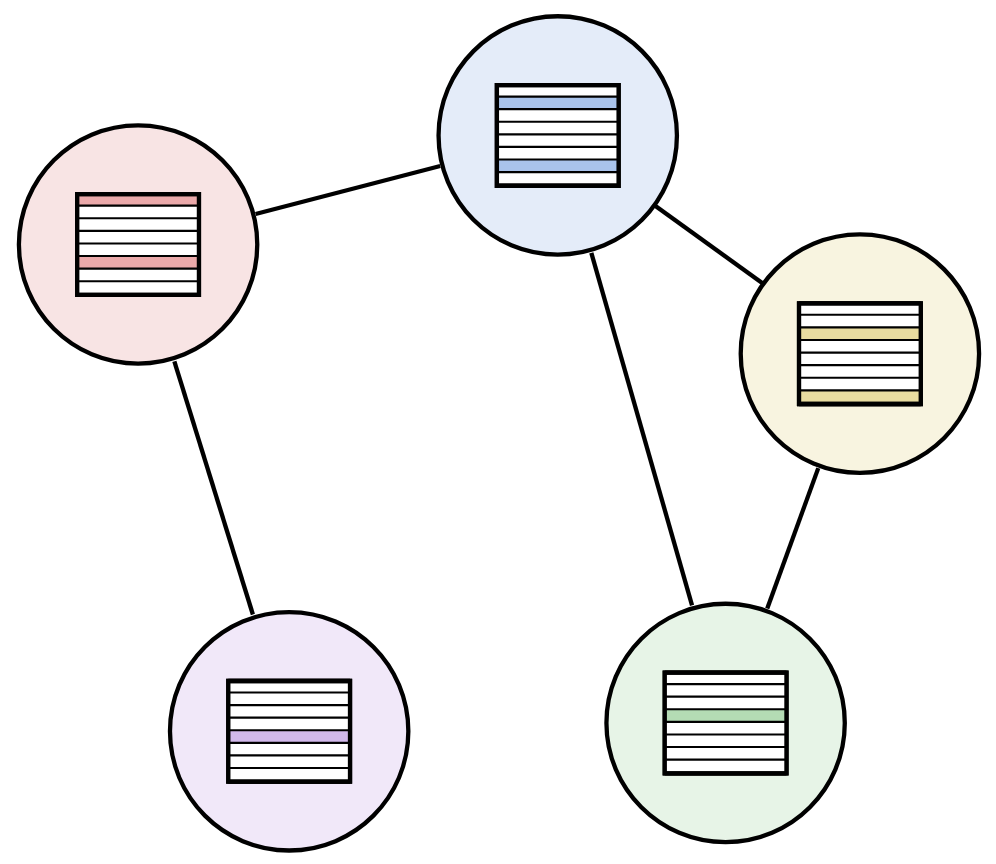
In many systems, data, information, and computational resources are distributed across multiple interconnected agents. Rather than transferring all observations to a central processor, distributed learning and signal processing allow global tasks to be carried out through local computation and information exchange among neighboring agents. This setting fundamentally changes the nature of learning and inference because statistical performance is coupled with network topology, communication constraints, synchronization, and local computational resources. Information may be distributed unevenly across the network, communication may be expensive or unreliable, and different agents may operate with heterogeneous data or computational capabilities. Consequently, algorithm design cannot be separated from the architecture of the network over which the algorithm operates. Understanding how local interactions give rise to reliable global behavior is a recurring theme, together with the effects of connectivity, communication frequency, and imperfect information exchange. The resulting research challenge is inherently multi-dimensional, requiring a careful tradeoff among statistical accuracy, local computation, communication overhead, network effects, robustness, and scalability.
|
|
Structured Inverse Problems for Information Acquisition and Sensing

|
Information acquisition often requires recovering unknown signals, matrices, or physical quantities from measurements that are indirect, incomplete, noisy, compressed, or nonlinear. Representative examples include blind deconvolution, blind calibration, phase retrieval, and low-rank recovery, which arise broadly in imaging, sensing, data analysis, and scientific applications. Such inverse problems are often ill-posed in the absence of additional information, making structural assumptions about the unknown object essential to both identifiability and computation. The measurement process itself also plays a decisive role: what can ultimately be recovered depends not only on the reconstruction algorithm, but on how information is acquired and encoded in the observations. This viewpoint motivates the joint consideration of sensing models, structural priors, statistical inference, and optimization rather than treating them as separate stages. Understanding the limits of reliable recovery—and designing algorithms that approach those limits—naturally brings together questions of identifiability, measurement complexity, robustness, optimization geometry, and convergence.
|
Optimization and Decision-Making in Communication, Radar, and Financial Systems
|
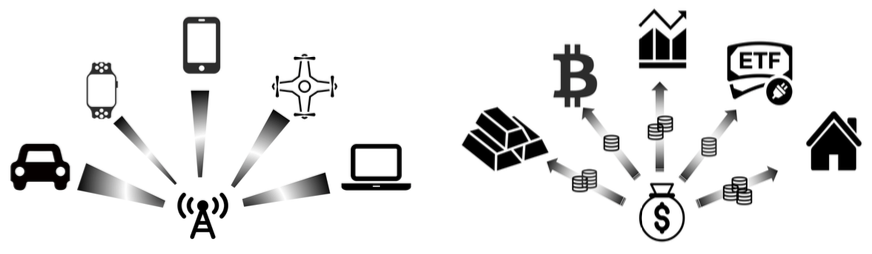
Communication, radar, and financial systems give rise to structured decision-making problems in which limited resources must be allocated under uncertainty and subject to domain-specific constraints. Examples include beamforming and resource allocation in wireless systems, waveform and sensing design, and portfolio construction and risk-aware decision-making in finance. Despite their different physical and economic interpretations, these problems often share mathematical features such as strongly coupled variables, nonlinear or nonconvex objectives, large problem dimensions, uncertainty, and competing performance criteria. Such commonality makes optimization a useful language for transferring ideas across application domains, while the structure of each domain remains essential for obtaining meaningful and computationally practical solutions. Data-driven methods introduce an additional layer by allowing models and decisions to adapt to observations, but they must still respect physical, operational, or economic constraints. Across these applications, a recurring methodological question is how general principles of optimization and learning can be translated into efficient and interpretable decisions without losing the distinctive structure of the underlying problem.
|
|
|